

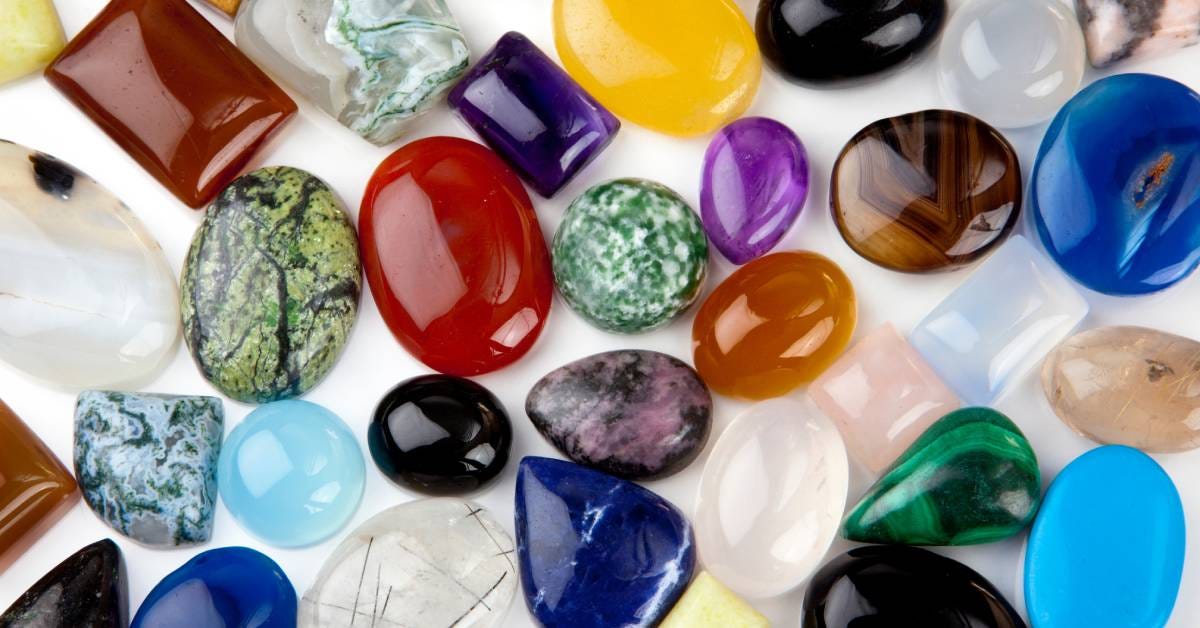
Crafting a cabochon from stone is a fascinating journey in the world of lapidary artistry. This process requires skill and patience but offers immense satisfaction as raw stone transforms into a polished gem. If you’re eager to explore the craft of jewelry making, creating cabochons can be an enriching experience.
With the right tools and techniques, you can create stunning cabochons that reveal the qualities of various stones. Understanding cabochon making starts with selecting a stone and preparing it for cutting. This cabbing tutorial on how to make cabochons from stone will walk you through each step. You’ll surely appreciate the intricacies of the stones, the precision of the cut, and the beauty of the final polish!
Understanding Cabochons
Cabochons are fundamental forms in lapidary art, characterized by their smooth, round upper surface and flat base. Unlike faceted stones that emphasize sparkle through multiple angles and reflective surfaces, cabochons showcase the stone’s natural beauty and color. They also highlight unique patterns, inclusions, or chatoyancy.
This style is popular for pendants, earrings, and brooches, where the stone’s shape and luster can show. With its understated elegance, the cabochon cut appeals to jewelry designers and lapidary enthusiasts who want to emphasize the intrinsic qualities of a gemstone.
Selecting the Right Stone
Choosing a stone is a critical step in the creative process, as each type has unique characteristics. Stones vary widely in hardness, color, pattern, and composition, and these qualities will influence the final appearance of your cabochon and the techniques you need to use.
Evaluate the stone for inclusions or natural flaws that might impact its stability or visual appeal. Familiarizing yourself with the properties of jasper, turquoise, and amethyst can empower you to maximize the stone’s beauty.
Preparing the Stone
Preparation of the stone can affect the quality of the final product. Begin by thoroughly inspecting the stone for cracks, fissures, or inclusions that could compromise its integrity during cutting and shaping.
Lay out your design, consider the stone’s natural features and patterns, and choose sections with striking colors or unique formations to highlight in the finished cabochon. During this stage, you can also decide on the best orientation to show off the stone’s aesthetic qualities, such as a vibrant streak of color or a captivating pattern.
Cutting Your Slab
Cutting your stone slab is a big step in the cabochon-making process because it dictates the cabochon’s eventual size and shape. This task requires a high-quality lapidary slab saw to achieve precise, clean cuts that work with the stone’s natural veins and grain patterns.
To begin, secure the stone on the slab saw’s cutting table for stability throughout the cutting process; this also minimizes vibrations and reduces the risk of fractures. As you cut, follow the natural lines and patterns within the stone to unveil its unique visual features. Careful planning and execution during this phase will reduce waste and enhance the cabochon’s final appearance.
Creating the Template
Creating a precise template is fundamental for crafting uniform cabochons. Select a template that matches your desired cabochon style, such as an oval, teardrop, or freeform design. Use templates made of durable yet transparent materials so that you can trace the shape directly onto your stone slab with a fine-tipped marker.
When marking the stone, pay attention to the grain and pattern within the slab, and align them to enhance the cabochon’s natural beauty. Consistent use of templates helps you maintain the structural integrity of the cabochon and ensures that each piece complements the jewelry design.
Rough Cutting
During rough cutting, you shape the stone close to its final form by removing excess material. This step calls for precision and careful attention to detail as you follow the outlines marked with your template with a trim saw. The goal is to approximate the cabochon’s intended shape and ensure that the stone remains intact and ready for further refinement.
As you cut, maintain a steady hand and pressure to avoid chipping or cracking the stone; also, stay as close to the template lines as possible. Rough cuts lay the foundation for subsequent smoothing and polishing while streamlining the cabochon creation process and preserving the stone’s beauty.
Shaping Your Cabochon
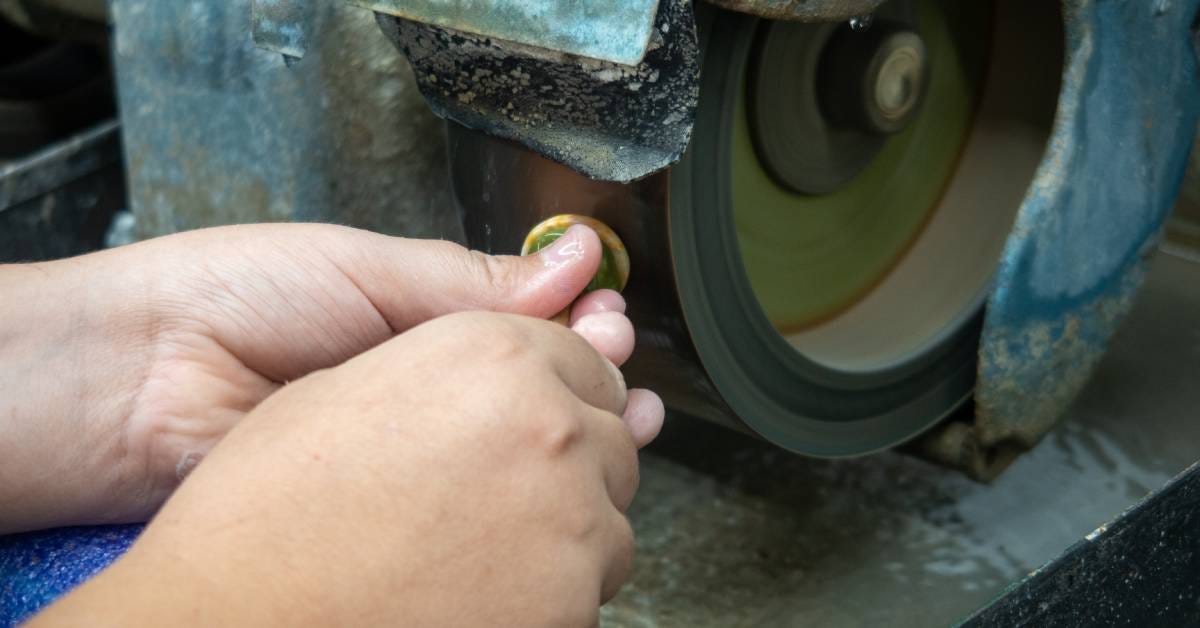
This process begins with using a grinding wheel or rotary tool, and you transition from coarse to progressively finer grits to perfect the stone’s contour. Maintain a delicate balance between removing excess material and preserving the cabochon’s intended dimensions.
During shaping, steady pressure and consistent motion are crucial to avoid uneven surfaces or accidental gouges. Focus on achieving a smooth, symmetrical dome by methodically working around the entire piece and continually assessing the stone’s balance and proportions.
Smoothing the Shape
Once you shape the cabochon into the desired form, the next step is to smooth out its surface and eliminate marks from the grinding process. Examine the cabochon closely to identify uneven areas or rough patches. Use fine-grit sandpaper or polishing pads to work over these areas gently; aim for a consistent, even finish across the entire surface.
This process demands patience and a delicate touch to avoid creating imperfections or over-sanding, which could alter the cabochon’s intended shape. As the stone becomes smoother, you will notice its natural patterns and colors emerging.
Bringing Out the Shine
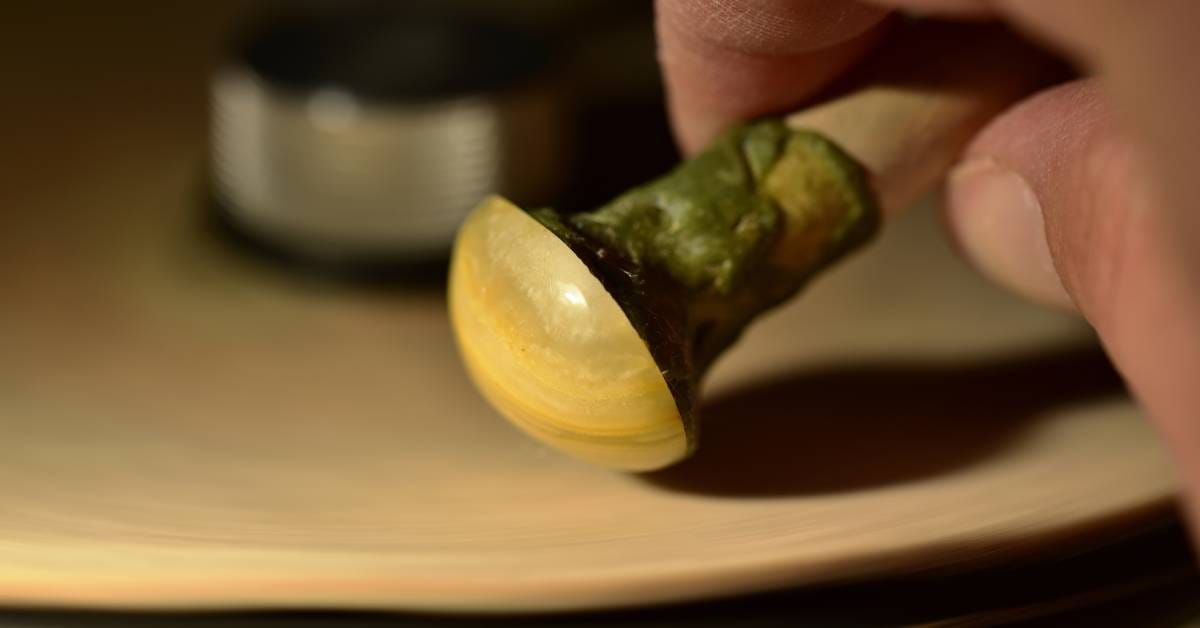
Polishing involves using a variety of polishing compounds and soft pads to work the stone’s surface until its natural luster emerges. Start by selecting an appropriate polishing compound for the stone’s mineral composition—it should maximize shine without causing damage. Apply the compound to a soft polishing pad or felt wheel. Gently buff the surface of the cabochon in a consistent motion, ensuring that each area receives the same amount of attention to avoid uneven polishing.
This cabbing tutorial to make cabochons from stone will enhance your skills as a lapidary artist and deepen your appreciation for the natural beauty within each rock. With persistence, practice, and patience, you will evolve as a cabochon artist and discover new points of inspiration. Mastering the art of cabochon making includes balancing precision with creativity, leading to pieces as functional as they are strikingly beautiful!